What Is a Portfolio Career? A Guide for Executives Exploring What’s Next

You’ve been the CEO, a Vice President, a director, or a senior leader for years. The trajectory was clear: climb, lead, succeed. But now you’re asking a different question: “What if I don’t want one big job anymore?”
If that question resonates, you’re not alone. More leaders are opting for what’s known as a portfolio career.
A portfolio career isn’t about doing less; it’s about doing work that fits who you are now, not who your family or corporate culture expects you to become.
What Is a Portfolio Career?
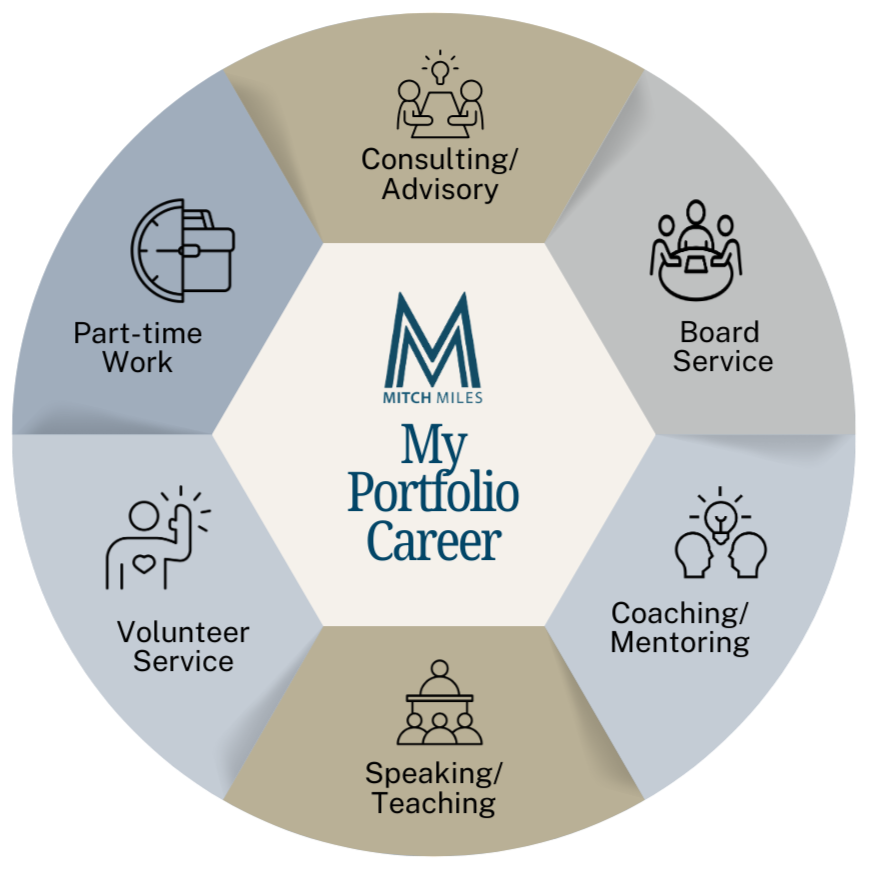
A portfolio career is a professional life built around multiple income streams, projects, or roles rather than a single full-time position.
Instead of putting all your expertise into one company, you diversify. You might combine:
Consulting or advisory work
Board service
Coaching or mentoring
Speaking or teaching
Passion projects or creative work
Strategic part-time roles
The key is intentionality. A portfolio career isn’t a collection of random gigs; it’s a curated set of activities that align with your skills, values, and the season of life you’re in.
Why Executives Are Choosing Portfolio Careers
Flexibility Without Sacrifice
You’ve proven yourself. You don’t need to work 60-hour weeks to validate your worth. A portfolio career lets you contribute at a high level while protecting time for what matters - family, health, exploration, rest.
Autonomy Over Your Time
No more corporate calendars dictating your life. You choose your clients, projects, and pace. You design work around your priorities, not the other way around.
Variety and Stimulation
After years in one industry or function, many executives crave intellectual diversity. A portfolio career lets you engage with different companies, sectors, and challenges.
Meaningful Impact Without Bureaucracy
You can focus on the work that energizes you, strategy, mentorship, problem-solving - without the meetings, politics, and administrative weight of corporate life.
What a Portfolio Career Is NOT
Let’s clear up some misconceptions:
This isn’t about winding down. It’s about working differently. Many portfolio professionals work as hard as they did in corporate, they’re just more intentional about what they say yes to.
It’s not freelancing or gig work. Freelancers take whatever work comes their way. Portfolio professionals curate their work. There’s a strategy behind what they choose.
It’s not a fallback plan. A portfolio career isn’t what you do because you can’t find a “real job.” It’s a deliberate choice to build a professional life on your own terms.
The Four Phases of Building a Portfolio Career
Phase 1: Clarity (Months 0-3)
Before you start saying yes to opportunities, get clear on:
What work energizes you vs. drains you
What income do you actually need (not what you’re used to)
What pace supports your life, not just your ambition
Phase 2: Experimentation (Months 3-6)
Test different types of work:
Take on a few consulting projects.
Join a board or advisory role.
Say yes to things that sound interesting, even if you’re not sure.
This phase is about discovery, not commitment.
Phase 3: Integration (Months 6-12)
By now, patterns emerge. You’ll notice:
Which activities generate income reliably
Which work feels meaningful vs. transactional
What combination of projects creates the rhythm you want
This is when you start pruning. You let go of what doesn’t fit and double down on what does.
Phase 4: Optimization (Year 2+)
Your portfolio has a structure. You’ve built systems. You know what you need (community, variety, structure) and what you don’t (constant urgency, energy-draining clients).
Now you’re not just working, you’re thriving.
Common Challenges (And How to Navigate Them)
“What do I say when people ask what I do?”This takes practice. Instead of a title, lead with the value you create:
“I help companies navigate strategic transitions.”
“I advise executives on leadership and organizational change.”
“I work with mission-driven organizations on growth strategy.”
“Will I miss the structure of corporate?”
Maybe. But structure isn’t gone—it just shifts from external to internal. You’ll need to create your own rhythms, routines, and accountability systems.
“What if I can’t replace my corporate income?”
Most people can’t—at least not immediately. But the question isn’t “Can I make the same amount?” It’s “What do I actually need, and is this trade-off worth it?”
“Will I feel isolated?”
Only if you allow it. In a portfolio career, community is intentional, not accidental. Join peer groups, invest in your relationships, and stay connected to your network.
Should you pursue a portfolio career? The answer depends on your goals and preferences.
A portfolio career works well if you:
Value autonomy and flexibility over stability and structure
Have a clear sense of your expertise and how to monetize it.
Are comfortable with income variability
Enjoy building and experimenting.
Want to work in a way that aligns with your current season of life.
It’s not for everyone. But for executives who are tired of fitting into someone else’s vision of success, it can be extraordinarily fulfilling.
Ready to build clarity, confidence, and community in your transition?
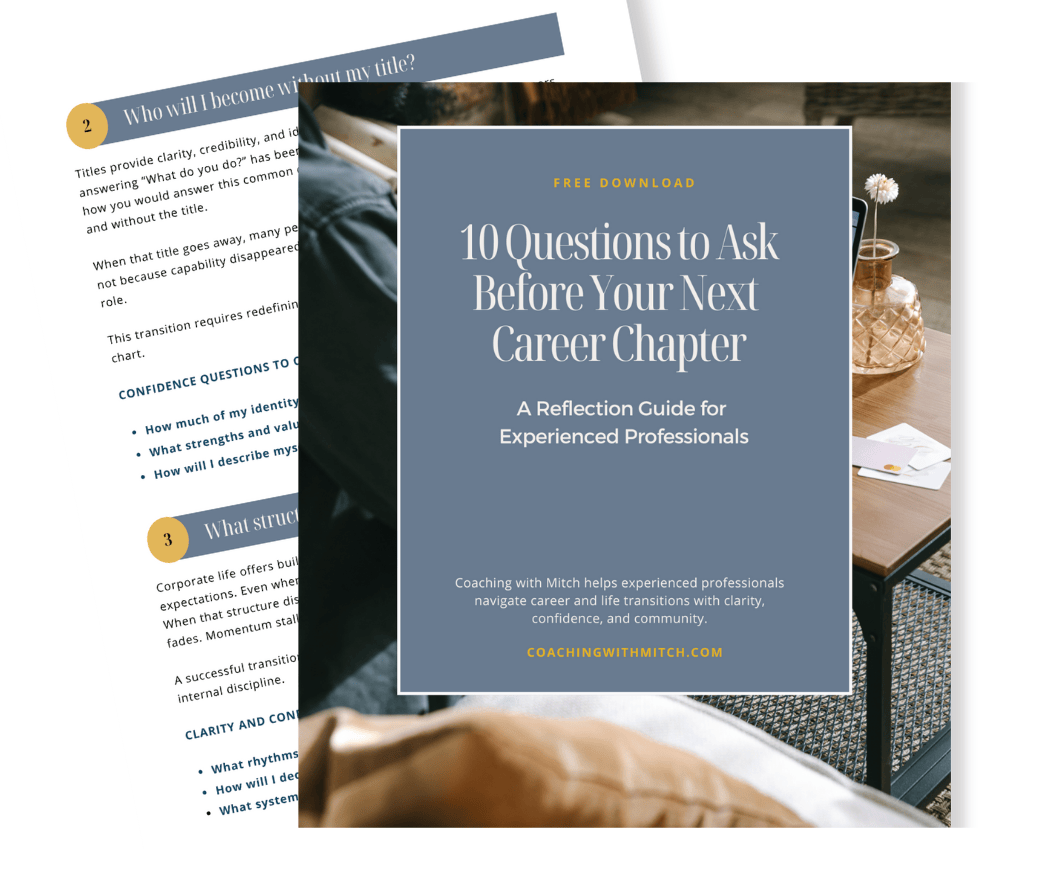
Download my free guide: "10 Questions to Ask Before Your Next Career Chapter" and start laying the foundation for what's next.
Or if you're ready for support, let's talk about coaching.